
I Will Never Forget: A Day of Remembrance, Service, and Reflection
There are only a few days in my life that have left an indelible mark on both my heart and my soul. September 11, 2001, is one of them.
Twenty-five years have passed, yet the images, the voices, the confusion, and the immeasurable loss of that day remain difficult to comprehend. Nearly 3,000 people were killed in the coordinated terrorist attacks in New York City, at the Pentagon, and near Shanksville, Pennsylvania. Behind every number was a human being—and behind every person was a family whose life was permanently changed.
We remember the firefighters who climbed the stairs of the World Trade Center while thousands of others were trying desperately to escape. We remember the law enforcement officers, emergency medical personnel, dispatchers, military personnel, rescue and recovery workers, medical professionals, and ordinary citizens who acted without knowing what the next moment would bring. Their courage was not abstract. It was demonstrated through individual decisions to move toward danger because someone else needed help.
We must also remember the families who waited for telephone calls that never came, the children who grew up without parents, the parents who buried children, and the spouses, siblings, friends, colleagues, and communities who learned to live with an absence that could never truly be filled.
For many, September 11 did not end when the smoke cleared. Survivors and responders continue to experience post-traumatic stress, grief, respiratory disease, cancer, and other serious physical and mental health conditions associated with the attacks and their aftermath. The National September 11 Memorial & Museum reports that the continuing health consequences still affect tens of thousands of people throughout the country. The federal World Trade Center Health Program continues to provide monitoring and treatment for eligible responders and survivors living with 9/11-related conditions (National September 11 Memorial & Museum, n.d.). Remembrance must therefore include not only those who died that day, but also those who continue to carry its physical and psychological consequences.
At Indian River State College’s Treasure Coast Public Safety Training Complex, our Criminal Justice Department Chair established an annual event to ensure that we never forget. The purpose has never been recognition or publicity. It is an act of remembrance, respect, and service.
Our seven-story fire tower is climbed 17 times—up and down—to represent, in a small and imperfect way, the distance firefighters climbed inside the World Trade Center towers. Completing all 17 rotations represents what they faced in ascending those towers only once. The physical exhaustion reminds us that what we are doing is symbolic. We climb in controlled conditions, with water, support, and the knowledge that we will return safely to the ground. They climbed carrying heavy equipment, surrounded by smoke and uncertainty, while others descended past them. There is no true comparison.
This year, we intentionally did not seek attention for the event. We quietly invited students from throughout the Public Safety Training Complex and members of our local first-responder community to participate at their own discretion. Those who chose to climb did so for their own reasons and in honor of people many of us never had the privilege of knowing.
However, the morning did not unfold as planned.
As we were preparing for the event, our institution received an emailed bomb threat. Buildings were evacuated as a precaution, first responders from multiple agencies arrived, and bomb squads began the deliberate work of examining the campus for possible danger. Our College president communicated the closure of the campus and provided instructions intended to protect students, employees, visitors, and responding personnel.
Thankfully, no explosive device was found, and the threat did not result in physical injury. I am deeply grateful for the swift, professional response of our College leadership and the public-safety agencies that came to our campus. Their actions reflected exactly what responsible leadership and emergency preparedness require: taking a potential threat seriously, communicating with the community, and prioritizing human life.
Nevertheless, the emotional impact was real.
I remain angry, frustrated, and saddened that a morning dedicated to honoring the victims and heroes of terrorism was interrupted by another threat of violence. Our surrounding communities have experienced multiple threats involving public institutions during the past week. Even when such threats are ultimately determined to be false, they are not harmless. They create fear, interrupt education and public service, consume emergency resources, and may reopen psychological wounds for people who have previously experienced violence, loss, or trauma.
As a criminologist, I understand the temptation to immediately speculate about motive. Was it someone seeking attention? A person attempting to create disruption? An individual acting from anger, grievance, or hatred? We may eventually learn the answer, or we may not. What I will not do is assign blame to an entire group or assume that mental illness explains threatening behavior. Mental-health conditions do not inherently make someone dangerous, and unsupported speculation can stigmatize people who are far more likely to need compassion and assistance than condemnation.
As a human being, however, I am still struggling with the reality that someone made the decision to create fear on a day set aside for remembrance.
I send my love, thoughts, and prayers to the victims of September 11, their families, the survivors, and the first responders, rescue workers, and recovery personnel who continue to live with post-traumatic stress and other lasting mental and physical injuries. I also extend those thoughts and prayers to the students, employees, families, and first responders affected by the recent threats within our own communities.
Perhaps more unexpectedly, I extend them to the person—or people—responsible for creating this fear. Accountability remains necessary, but compassion and accountability are not mutually exclusive. Whatever pain, anger, ideology, or desire for attention led to these actions, I hope those responsible are identified, stopped from causing further harm, and provided with whatever intervention justice and public safety require.
The September 11 Memorial & Museum describes remembrance as encompassing victims, families, survivors, and rescue and recovery workers whose lives continue to be affected by the attacks (National September 11 Memorial & Museum, n.d.). That understanding matters. To remember is not merely to look backward. It is to recognize continuing sacrifice, to care for those who still carry the consequences, and to choose service over fear.
Our remembrance may have been interrupted, but its meaning was not erased.
The people who ran into the World Trade Center towers did not do so for recognition. They did it because others needed them. Their courage continues to challenge us—to serve, to protect, to teach, to remember, and to refuse to allow fear to have the final word.
To the victims, the families, the survivors, and the first responders of September 11, 2001: my heart and my prayers remain with you.
I will never forget.
Dr. M
These reflections are my own and are shared as a personal remembrance of September 11, 2001, and of the continuing sacrifices made by victims, families, survivors, and first responders.
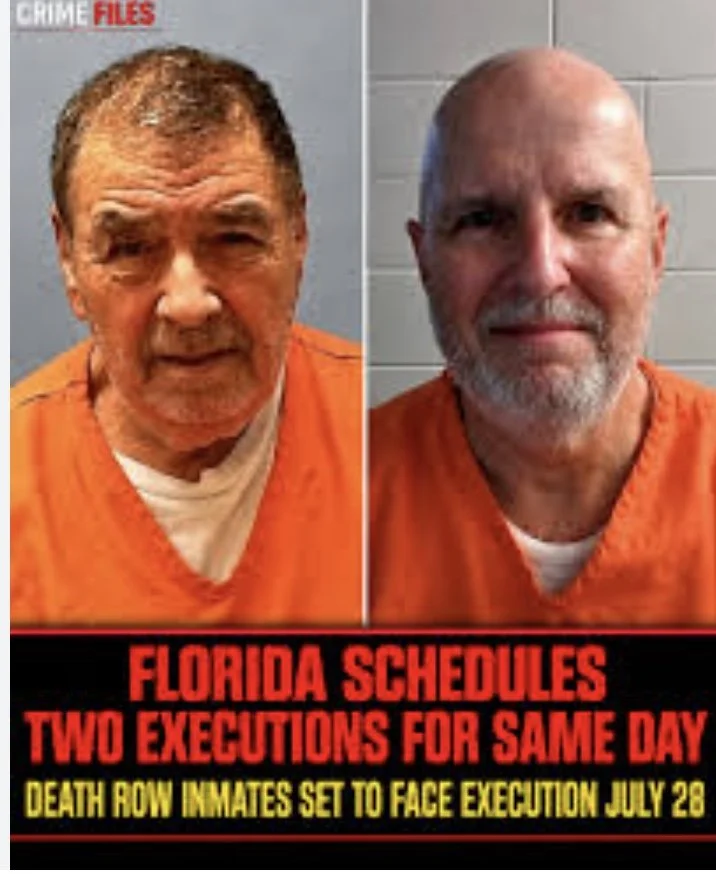
A nuetral look at Florida’s death penalty and the historic day of two executions, six hours apart.
Six Hours Apart: What Florida’s Double Execution Reveals About Capital Punishment
By Dr. Kimberlie A. Massnick, Forensic Criminologist
July 27, 2026
Tomorrow, two clocks are scheduled to run toward death inside Florida State Prison.
At noon on July 28, 2026, the State of Florida is scheduled to execute James Aren Duckett, age 68. Six hours later, at 6:00 p.m., the state is scheduled to execute Dominick Anthony Occhicone, age 80. If both executions proceed, Florida will carry out two executions on the same day for the first time since 1964—and for the first time in the modern, post-Gregg era of capital punishment. (Associated Press, 2026)
The timing makes this an extraordinary moment in Florida’s criminal justice history. Yet the significance extends beyond the unusual schedule. These cases bring several of the most difficult questions surrounding capital punishment into the same twenty-four-hour period: What does justice mean decades after a murder? What can science establish—and what happens when it cannot provide a definitive answer? Does an execution bring closure to victims’ families? What does empirical research tell us about deterrence, wrongful convictions and the human consequences of capital punishment?
These questions can be examined without reducing the discussion to whether one is “for” or “against” the death penalty. Capital punishment is simultaneously a legal sanction, a public policy, an institutional process and an intensely human event. Understanding it requires attention to all four.
Two Cases, Nearly Four Decades Later
Duckett was convicted of the 1987 sexual battery and murder of 11-year-old Teresa McAbee. According to the Florida Supreme Court, his most recent litigation involved DNA testing of a small biological sample preserved from the original investigation. The testing did not exonerate him, but the results were described as inconclusive. Additional testing was denied after the court determined that the other items identified in his request contained no identifiable or testable genetic material. On July 24, the court denied his latest request for a stay of execution. (Florida Supreme Court, July 24, 2026)
Occhicone was convicted of killing the parents of his former fiancée in 1986. He received a death sentence for the murder of her mother and a life sentence for the murder of her father. His conviction and death sentence were affirmed in 1990. If his execution proceeds, he will reportedly be the oldest person executed in Florida’s history. (Occhicone v. State, 1990; Associated Press, 2026)
The severity of these crimes must not be minimized. Teresa McAbee was eleven years old. Two parents were killed in their home. Their families have lived with the consequences for approximately forty years.
At the same time, the passage of nearly four decades raises an unavoidable question: When punishment occurs so long after the crime, what precisely is being accomplished in the present?
What Does the Research Say About Deterrence?
Deterrence is one of the most frequently cited purposes of criminal punishment. The theory is straightforward: when the consequences of an act are sufficiently severe, other people may be discouraged from committing similar acts.
Establishing that effect scientifically, however, is far more complicated.
In its comprehensive review of death-penalty research, the National Research Council concluded that the existing studies could not reliably determine whether capital punishment increases, decreases or has no effect on homicide rates. A central methodological problem is separating the possible effect of execution from the effects of other punishments, particularly life imprisonment without parole. (National Research Council, 2012)
This does not empirically prove that the death penalty has no deterrent effect. It means the available research does not permit a scientifically dependable conclusion in either direction.
That distinction matters. Public policy discussions often demand a simple answer, while responsible research sometimes produces a more restrained one: the evidence does not allow us to know with sufficient confidence.
When Forensic Science Does Not Produce Certainty
Duckett’s case places forensic science at the center of the discussion. Advances in DNA analysis have transformed criminal investigations, identified offenders, excluded suspects and helped overturn wrongful convictions. Yet DNA evidence is not a machine that automatically produces a binary answer of guilt or innocence.
Biological material may be limited, degraded, contaminated, mixed with DNA from multiple individuals or consumed during testing. Different testing methods may also have different capabilities. In Duckett’s case, the sample was tested using single-nucleotide polymorphism analysis designed for small or deteriorated samples. The process consumed the remaining specimen, and the resulting analysis did not produce a conclusive DNA identification and therefore neither exonerated Duckett nor provided new genetic confirmation of his guilt.
Legally, an inconclusive result is not the same as exculpation. Scientifically, however, “inconclusive” is also not the same as confirmation.
This tension is especially important in a capital case because execution is irreversible. A prison sentence can theoretically be corrected when new evidence emerges. An execution cannot.
The concern is not merely hypothetical. A peer-reviewed study published in the Proceedings of the National Academy of Sciences, examining death sentences imposed in the United States from 1973 through 2004, estimated that if all death-sentenced defendants remained under sentence of death indefinitely, at least 4.1 percent would eventually be exonerated. The researchers characterized this as a conservative estimate. (Gross et al., 2014)
That national estimate does not establish that any particular condemned person is innocent. It provides empirical evidence that wrongful capital convictions are not merely hypothetical and must be considered whenever scientific evidence remains disputed or incomplete.
The Complicated Meaning of “Closure”
Executions are frequently discussed as a means of providing closure to victims’ families. The word is understandable. Families affected by homicide may spend years attending trials, hearings and appeals while repeatedly confronting the circumstances of a loved one’s death.
Research suggests, however, that the emotional consequences of an execution are not uniform.
A content-analysis study examined family-member statements appearing in newspaper coverage of 138 executions conducted between 2006 and 2011. Among the family members whose statements were reported, 35 percent described the execution as justice, while 31 percent referred to closure, healing or movement toward either. These findings suggest that some family members do experience an execution as meaningful. They also indicate that this response cannot be assumed for every family. (Burton & Tewksbury, 2013)
“Closure” may also be too final a word for traumatic grief. An execution can conclude a legal process, but it cannot restore the person who was killed, erase traumatic memories or produce the same emotional outcome for every surviving family member.
A victim-centered approach therefore requires something more thoughtful than speaking about families as if they constitute a single group with one set of needs. Some may support the execution. Some may oppose it. Others may experience relief, grief, anger, compassion or several conflicting emotions at once. Each response is human, and none should be appropriated to settle a broader political argument.
The Wider Human Circle
The consequences of an execution extend beyond the condemned individual and the immediate family of the murder victim.
They reach the offender’s relatives, who may simultaneously acknowledge the harm caused and grieve the impending death. They reach attorneys and investigators who have spent years reviewing the case. They reach correctional officers, medical personnel, spiritual advisers, journalists and witnesses. They also reach the institutional employees required to prepare for and carry out two executions within six hours.
Recognizing this wider circle does not create an equivalence between those affected. The original victims remain central, and the harms are not interchangeable. A humanistic analysis simply acknowledges that state punishment operates through people and leaves consequences among people.
What Tomorrow Represents
July 28 will not resolve the national debate over capital punishment. It will, however, concentrate that debate into a single day.
One execution involves a condemned man whose recent DNA testing produced no definitive identification. The other involves an 80-year-old man who has been incarcerated for approximately four decades. Both cases involve victims whose lives were violently taken and families who have waited almost forty years for the legal process to reach this point.
For criminologists, the day presents questions about deterrence, procedural reliability, forensic limitations and the purposes of punishment. For legal scholars, it raises questions about finality and due process. For victim advocates, it underscores the varied and continuing needs of families after homicide. For correctional professionals, it represents an unusual and demanding institutional undertaking.
For the general public, perhaps the most important lesson is that capital punishment cannot be fully understood through slogans.
It is possible to acknowledge the brutality of the underlying crimes without abandoning questions about the reliability of the process. It is possible to center victims without assuming that every victim’s family defines justice in the same way. It is possible to respect lawful court judgments while still examining what empirical research can—and cannot—tell us about the policy being carried out.
Tomorrow, Florida is scheduled to execute two men six hours apart. The law treats these executions as the final implementation of sentences imposed decades ago. Their meaning, however, will not be confined to the execution chamber.
They will become part of a much larger record: the record of how society responds to irreversible harm, how institutions exercise irreversible authority and how justice is understood when neither time nor punishment can return the people who were lost.
Sources
Associated Press. (2026, July 16). Two executions scheduled for same day in Florida for the first time in more than 60 years.
Burton, C., & Tewksbury, R. (2013). How families of murder victims feel following the execution of their loved one’s murderer: A content analysis of newspaper reports of executions from 2006–2011.
Gross, S. R., O’Brien, B., Hu, C., & Kennedy, E. H. (2014). Rate of false conviction of criminal defendants who are sentenced to death.
National Research Council. (2012). Deterrence and the death penalty.
Supreme Court of Florida. (1990). Occhicone v. State, 570 So. 2d 902.
Supreme Court of Florida. (2026, July 24). Duckett v. State, Case Nos. SC2026-1083 & SC2026-1084.
This article reflects the status of the cases as of July 27, 2026. Pending court action could alter either scheduled execution.

Just a Normal Ole Saturday
Save the Date!
SATURDAY, NOVEMBER 4TH, 2023 • 6-10PM
VIP COCKTAIL HOUR | COUNTRY LINE DANCING
LIVE MUSIC FROM THE TOM JACKSON BAND
SILENT AUCTION | MEET THE HORSES & MORE!
Ah, the weekend - that magical time when you can do all the nothing you've been dreaming about all week. But not for me. No, I had the distinct honor of receiving the golden ticket to hobnob with the philanthropic elite at a local shindig where they mix tunes with ponies for a good cause. That's right, a friend roped me into the glamorous world of fundraising for a music and equine therapy outfit. They're like the horse whisperers for kids in need, but with more tambourines.
And get this – it wasn't just a cozy gathering of do-gooders. I was amidst the company of eight of her proteges – these kids were so eager to volunteer, you'd think they were giving out free backstage passes to a TikTok convention. There we were, a merry band of charity musketeers, diving headfirst into a sea of activities. Who knew that trying to convince people to part with their cash could be more fun than a barrel of monkeys with a trust fund?
The moral of the story? Next time you think you're in for a snooze-fest of a weekend, just find yourself a friend with a penchant for equine therapy and a troop of enthusiastic mini-volunteers. It's the wild ride you never knew you needed!
I must admit, evenings like these are a balm for the soul. For those residing near Florida's Treasure Coast, I earnestly recommend visiting Harmony Hope Stables. It's a place deserving of attention and support. Amidst the stereotypes of Martin County's affluence and exclusivity, there lies a heartening counter-narrative.
During my time there, I was quietly moved by the display of pure altruism. From local business owners to families who not only utilize but genuinely rely on the facility's services, their generosity is a testament to the community's spirit. Moreover, the local college students there impressed me deeply with their maturity and eagerness to give back. These experiences serve as a humbling reminder that beneath the surface, there's a wealth of kindness and a commitment to service that binds us all.

Time Flies
Well here I am again. Wondering how months have flown by without even an attempt to post a blog. How in the world do people keep up with social media… like juggle multiple platforms like a pro, blog, work and find time to have a social life and oh yes, the ever important self-care?
Well here I am again. Wondering how months have flown by without even an attempt to post a blog. How in the world do people keep up with social media… like juggle multiple platforms like a pro, blog, work and find time to have a social life and oh yes, the ever important self-care?
So, I am going to give this blog another shot. Why torture myself, you ask? I could just say, why not? Because I have a tendancy to be an over-achiever or so I am told. The truth, I used to write all of the time and I have a project in mind, so I need to dust off the cobwebs.
No way, I am telling you about this new project because it is a totally for me project. I may or may not share if and when I complete it. We will just have to see how it goes and then how I feel about it in the end. Support would be appreciated…even though you don’t know the project you can still send support that I am just me and pull off something outside of the box and crazy. You know, being my own brand of happy, crazy and entertaining.
So what to brief you on and how, with so many months and miles between us. Hmmm, so let’s go with opportunities that came out of no where, goals I set and achieved and tease you with the fact that I have a major announcement coming soon. The “act” has already come to fruition and it includes more than just me and makes the community service, teacher, and person who doesn’t take NO for an answer so unbelievable proud and happy. Surprised…not at all because I believe that everything can be accomplished if enough effort and heart are put into it. And we did and will continue to do so. Intrigued…I hope so because it is something beyond my wildest imagination. That says a lot!
Those opportunities I mentioned, came in the form of being the subject matter expert (criminologist, victimologist…) on multiple shows and a bunch of episodes for new shows on Oxygen. Mark of a Killer, Charmed to Death and a new show previewing in January are under my belt. Guess what, I liked. No, I loved it. It is something I never imagined doing. I get to bring attention to my school (Indian River State College), get my students to engage in their criminal justice studies, and made a bunch of amazing contacts and friends along the way. A lot of those have spoken with, been interviewed by, offered jobs to and given lectures to my students. That is the best part of the whole thing.
I spoke again this year at CrimeCon, and was joined by my podcast co-host PCubed (Pierre.) We are joined each year by more students and alumni. Watching them network, while I do the same is so much fun. How does the saying go, “It is amazing what you can accomplish when you don’t care who gets the credit?” We encourage them and then watch them fly. That is the teacher in both me and Pierre - making an impression on others so that they believe in themselves and reach for the stars. And that is where they belong.
If you wondering why I haven’t mentioned the podcast that is because I have a “day job” as well. As a criminal justice professor, it has been a crazy ride, with ups and downs, changes and challenges thanks to Covid and quite a few other forces to deal with. But fear not, P’s eye rolling will be returning soon and I have researched myself up one side and down the other to bring you new cases, entertain you as well, annoy PCubed which is always a favorite and most importantly bring the victims to life as they are who we should truly focus on.
Hmmmm, so much to do still tonight, so off I run. I hope you are glad to hear from me and get back on track following me and encouraging me to continue trying new things and reach for my own stars.
Glad to be back!
Dr. M

Just a Normal Day
So what should I share with you today? Let’s see:
The Alpha Phi Sigma International Criminal Justice Honor Society, Pi Beta Iota Chapter at IRSC co-sponsored (formality) with the Clarke Advanced Learning Center’s National Honor Society to organize and participate in a one mile walk/run this past Saturday with all proceeds to support the Catch the Wave of Hope Organization, which yes is the same one my students attended a gala for last Saturday. This organization is to promote the education and many many other aspects, including treatment for victims of human trafficking. To find out more about or to support this organization please visit catchthewaveofhope.org. May is also mental health month so keep that in mind when looking for things do to people to support.
So what should I share with you today? Let’s see:
The Alpha Phi Sigma International Criminal Justice Honor Society, Pi Beta Iota Chapter at IRSC co-sponsored (formality) with the Clarke Advanced Learning Center’s National Honor Society to organize and participate in a one mile walk/run this past Saturday with all proceeds to support the Catch the Wave of Hope Organization, which yes is the same one my students attended a gala for last Saturday. This organization is to promote the education and many many other aspects, including treatment for victims of human trafficking. To find out more about or to support this organization please visit catchthewaveofhope.org. May is also mental health month so keep that in mind when looking for things do to people to support.
THESE STUDENTS ARE AMAZING!
I had a million errands to run which I did but accomplished absolutely nothing other than finding out what I will NOT be wearing for CrimeCon in June. House was cleaned, more of my gardens were tended to but there was probably more butterfly and bird watching going on than weed pulling and tree trimming. As you are learning this is my love, my sanity and my time to think and be creative.
Hmmm, this week starts the beginning of the first semester of the summer at Indian River State College so I had a bunch of classes to get prepared. Guess what???? DONE! I feel so ahead of the game and now I can focus the next couple of days exclusively on CrimeCon.
I am also getting reading for a local presentation at a new place…. for me anyway. True Crime and a Glass of Wine will make its first appearance in more than a year at Hop Life Brewing in Port St. Lucie on Thursday, May 20th. Looking forward to getting back out there and enjoying myself, meeting new people and having some fun.
Ok, this was just a quick catch up because now I have to get busy returning JMail…. some of these people need to chill. I can’t write them everyday let alone multiple times a day…. I have things to do because I didn’t do something to get myself stuck in a cell 23/1. Have I mentioned they are quite needy and demanding at times?
Enjoy your Monday, set a goal, get something accomplished but most of all do something to spend some time for yourself. Life is meant to be fun!
Chat soon~
Dr. M
Unbelievably Proud
If a professor is lucky one or two students will pass through his or her class during his or her career that they know will make them unbelievably proud and validate the choice of career. Trust me teaching is a job that no one goes into because of the paycheck. The hours are long because they continue way past the time one leaves the office, weekends are always interrupted and trying to be continually creative so that students stay engaged takes a lot of thought and time. Ask most of us, and we will tell you that it is a job that is worth all of this.
If a professor is lucky one or two students will pass through his or her class during his or her career that they know will make them unbelievably proud and validate the choice of career. Trust me teaching is a job that no one goes into because of the paycheck. The hours are long because they continue way past the time one leaves the office, weekends are always interrupted and trying to be continually creative so that students stay engaged takes a lot of thought and time. Ask most of us, and we will tell you that it is a job that is worth all of this.
This past weekend is the perfect example for me and I want to share it with you. As most of you know, I am a criminal justice professor. Along with all of the other professional experiences I enjoy, one that I am honored to have been asked to participate in, is to serve on the Board of Directors of Catch the Wave of Hope. PLEASE PLEASE look them up. This organization believes in educating the public about the horrific crime of human trafficking, teaching our children how to be safe, trains law enforcement in noticing the red flags and then somehow also finds the time for the amazing Executive Director to provide treatment and find services for those who have fallen victim to those who would abuse them.
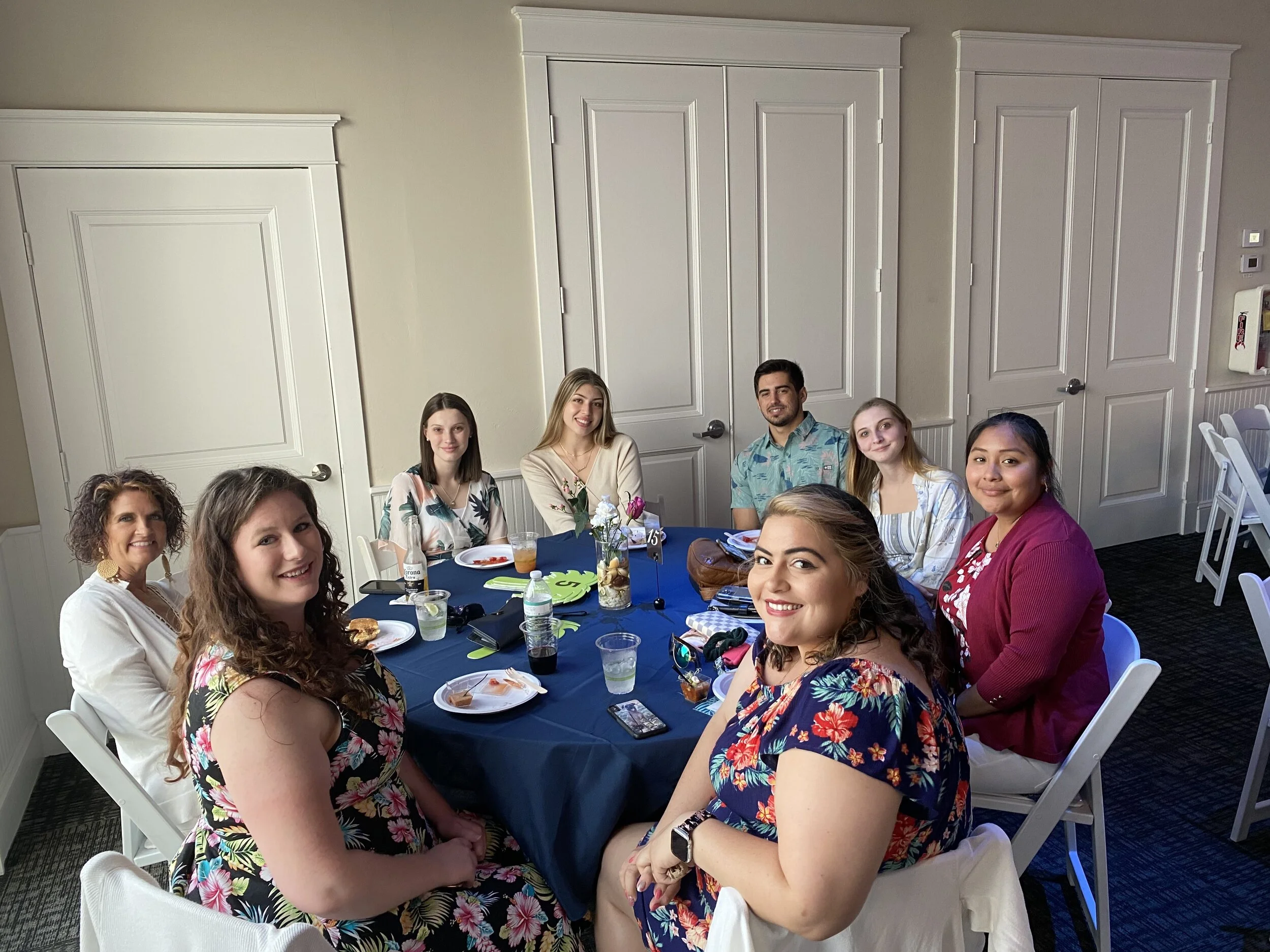
Where does the unbelievably proud come in???? Here ^ just look at the students who attended the Catch the Wave of Hope Gala (island theme) this past weekend. They are just a few of the criminal justice students that attend Indian River State College and are also members of the Pi Beta Iota Chapter of the International Criminal Justice Honor Society!!! What were you doing when you were their age?
These students and one alumnus came out to show support for not only the organization (CTWOH) but to also learn and bring back knowledge to their classmates, incorporate information into their course work and just in general bring awareness to the public that human trafficking exists even in “our” backyard.
These young adults represented the college, the honor society and me in a way that I think they deserve to be recognized for dealing with a topic that most adults don’t want to admit exist. They are true ambassadors and I couldn’t have been more proud to escort them to this event.
By the way, if you aren’t aware of it most college students are not wealthy and definitely did not choose the criminal justice career path to get any wealthier than I did when I decided to teach BUT do you know that these students not only bid and rebid and bid again on items to support the cause and even more to my amazement THEY WON!
Look at these faces because these are the faces of your future leaders and these are leaders that I, as well as the rest of the criminal justice department of Indian River State College will proudly stand behind and support them all the way to their own version of success.
To those of you that I am speaking about: THANK YOU for being YOU. For making us proud and showing your knowledge, understanding and support for a cause that needs much more attention!
Dr. M